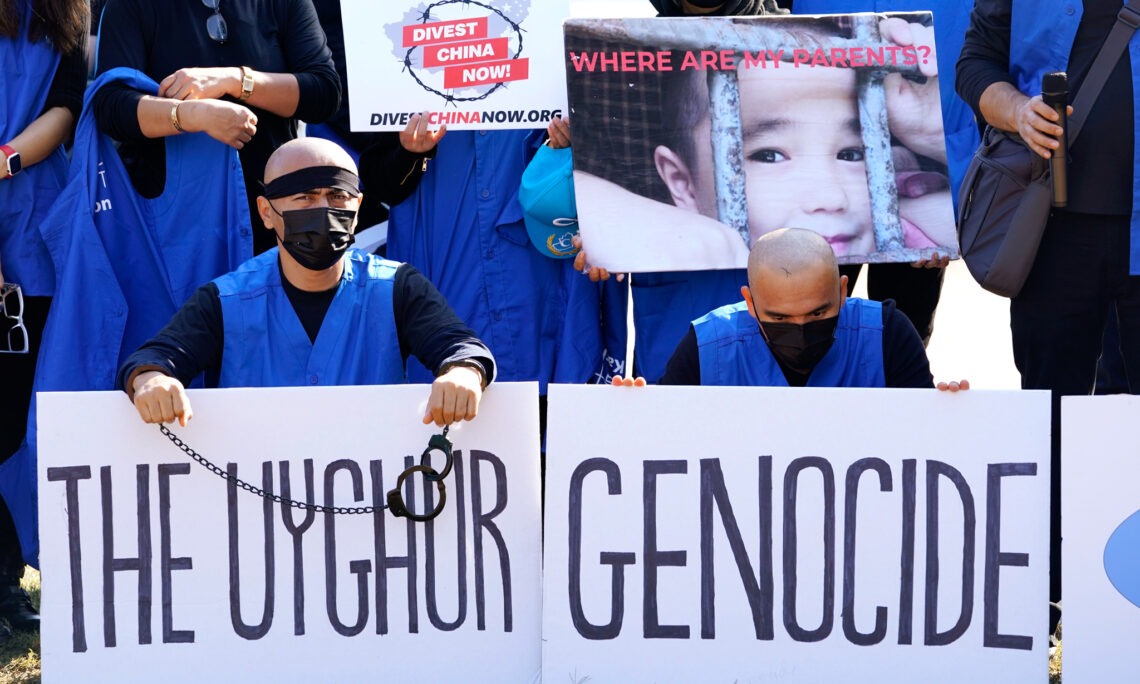
We invite you to read the essay "What is at stake in handling the case of the Uyghurs?"prepared by the Director of the Centre, Dr. Gyorgy Tatar. The Budapest Centre for Mass Atrocities Prevention thereby urges the International Community to take all appropriate measures discussed in the document to tackle the Uyghur Genocide and prevent further escalation.
We also share the Joint Statement of Alice Wairimu Nderitu, United Nations Special Adviser on the Prevention of Genocide, and Michelle Bachelet, the High Commissioner for Human Rights, on the situation in Myanmar.
Regrettably, the UN Security Council has not learned the lessons of the genocide committed against the Rohingya people in 2016: its statement released yesterday fails to decide on taking prompt and effective steps for preventing the escalation of the crisis and protecting the population of Myanmar from mass atrocity crimes.
In light of increasing levels of intolerance, discrimination and group hatred in Europe, the CEE Prevent Net project aims at safeguarding young people by strengthening their resilience toward these phenomena and their skills to contribute to a peaceful and democratic society. Building on the previous project European Fair Skills, CEE Prevent Net focuses on Central and Eastern Europe and Eastern Germany, since this region shares common socio-historic experiences, structural conditions and current challenges.
The project’s main objectives comprise fostering the capacity of practitioners from social/youth work and non-formal education to deal with intolerance, group hatred and violence among young people; creating a platform for multi-agency cooperation in the project countries and across the CEE region; mustering support from stakeholders and policy-makers beyond political partisanship and societal cleavages; and raising awareness for CEE issues and approaches in European and international prevention networks, where this region is still under-represented.
The intention of this series of papers is to raise awareness of the risks of artificial intelligence (AI) in the realm of human rights, and more specifically, mass atrocities. They are written by a group of young research assistants during their internship at the Budapest Centre who will finish their graduate studies in the next months. The articles target people of their age specifically to introduce them to the issue of AI in the context of mass atrocities and grant them a broad overview of it. The papers do not go in-depth; they merely introduce the readers to the topic of AI through the lens of mass atrocities and human rights. While academics are not the primary target, they are welcome to utilize the paper for their own purpose.
“The Rise of Artificial Intelligence: Risks from the Perspective of Mass Atrocities” is the first paper written of this series and presents a global introduction to this topic. Several risks linked to or run by AI in the field of mass atrocities are detailed, such as sensitive data, the question of ethics, cybercrime or warfare.
The second paper that will be published soon regards the policies and recommendations made by international and regional organizations in response to the risks that AI may pose to human rights abuses, including the perpetration of mass atrocities.
More papers on this topic are planned to be published on the social media platforms of the Budapest Center for Mass Atrocities in the forthcoming months.
Young and ambitious researchers are most welcome to participate in this endeavor!!